
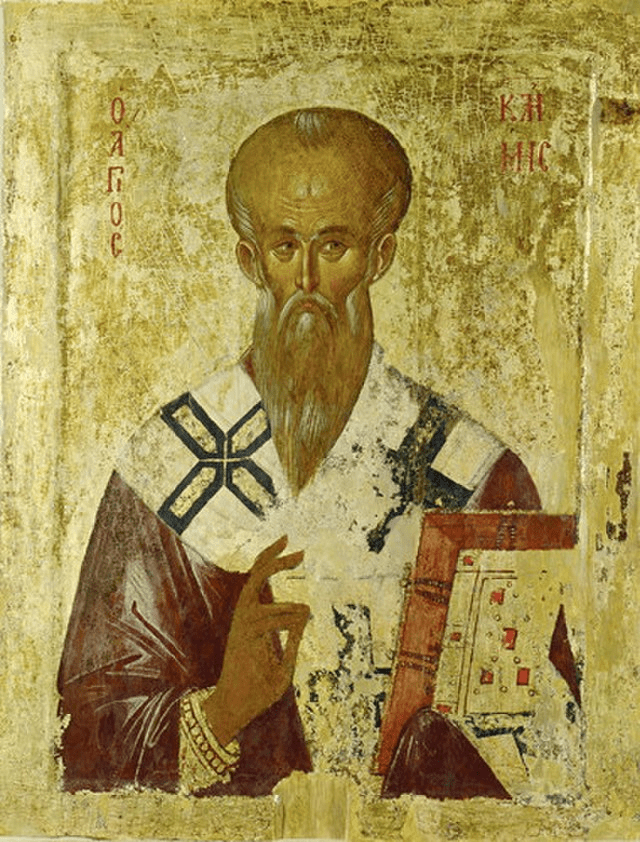
One of the Early Church Fathers, St. Clement of Alexandria (c.150 A.D.-215 A.D.), wrote about Christ as an Educator. (A work worthy of our time and contemplation as we seek to teach as Christ taught.) At the end of Book 1 Chapter 1, St. Clement writes the following:
Therefore, the all-loving Word, anxious to perfect us in a way that leads progressively to salvation, makes effective use of an order well adapted to our development; at first, He persuades, then He educates, and after all this He teaches.
St. Clement of Alexandria. Christ the Educator, Book 1, Chapter 1.
As a teacher, I’m struck immediately by two things. First, teaching comes last!? Second, what’s the difference between teaching and educating (is it significant that the work is Christ the Educator and not Christ the Teacher)?
I’ve added the chapter in its entirety at the end of this post.

Christ is anxious to perfect us. God reaches out to us with power, glory, and great tenderness. Persuade, educate, then teach. There is wisdom and vulnerability in this order. The order is at the complete service of the student. (Makes sense given our Educator was led to the Cross like a lamb to the slaughter because of his great love for us.)

There is a kind of liturgical flow to this order. As we enter into the Easter Triduum, let’s contemplate what it means to be a student of the liturgy, a disciple of the Educator.
After the Triduum, consider commenting your thoughts and experience on the following:
Is this progressive order reflected in my lesson planning? class procedures? loving discipline?
Does the teacher have the authority to persuade students to pursue moral goods? (especially the common goods of the class)
How might Christ the Educator offer a model for us to imitate as we seek to master our craft as classical, Catholic Educators?
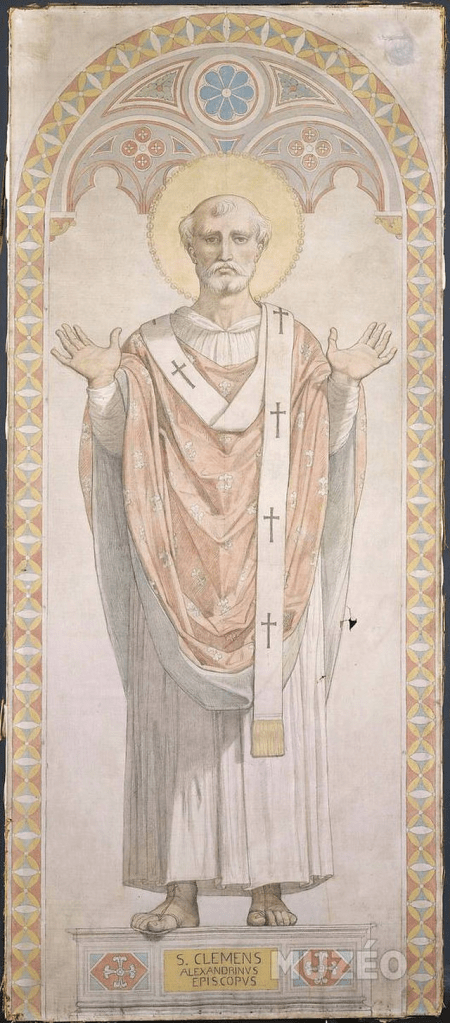
St. Clement of Alexandria (c. 150-215)
Christ the Educator (The Pedagogue)
Book I Chapter 1
O you who are children! An indestructible cornerstone of knowledge, holy temple of the great God, has been hewn out especially for us as a foundation for the truth. This cornerstone is noble persuassion, or the desire for eternal life aroused by an intelligent response to it, laid in the grounds of our minds.
For, be it noted, there are these three things in man: habits, deeds, and passions. Of these, habits come under the influence of the word of persuasion, the guide to godliness. This is the word that underlies and supports, like the keel of a ship, the whole structure of the faith. Under its spell, we surrender, even cheerfully, our old ideas, become young again to gain salvation, and sing in the inspired words of the psalm: “How good is God to Israel, to those who are upright of heart.” As for deeds, they are affected by the word of counsel, and passions are healed by that of consolation.
These three words, however, are but one: the self-same Word who forcibly draws men from their natural, worldly way of life and educates them to the only true salvation: faith in God. That is to say, the heavenly Guide, the Word, once He begins to call men to salvation, takes to Himself the name of persuassion (this sort of appeal, although only one type, is properly given the name of the whole, that is, word, since the whole service of God has a persuassive appeal, instilling in a receptive mind the desire for life now and for the life to come); but the Word also heals and counsels, all at the same time. In fact, He follows up His own activity by encouraging the one He has already persuaded, and particularly by offerring a cure for his passions.
Let us call Him, then, by the one title: Educator of little ones, an Educator who does not simply follow behind, but who leads the way, for His aim is to improve the soul, not just to instruct it; to guide to a life of virtue, not merely to one of knowledge. Yet, that same Word does teach. It is simply that in this work we are not considering Him in that light. As Teacher, He explains and reveals through instruction, but as Educator He is practical. First He persuades men to fom habits of life, then He encourages them to fulfill their duties by laying down clear-cut counsels and by holding up, for us who follow, examples of those who have erred in the past. Both are most useful: the advice, that it may be obeyed; the other, given in the form of example, has a two-fold object—either that we may chose the good and imitate it or condemn and avoid the bad.
Healing of the passions follows as a consequence. The Educator strengthens souls with the persuassion implied in these examples, and then He gives the nourishing, mild medicine, so to speak, of His loving counsels to the sick man that he may come to a full knowledge of the truth. Health and knowledge are not the same; one is a result of study, the other of healing. In fact, if a person is sick, he cannot master any of the things taught him until he is first completely cured. We give instructions to someone who is sick for an entirely different reason than we do to someone who is learning; the latter, we instruct that he may acquire knowledge, the first, that he may regain health. Just as our body needs a physician when it is sick, so, too, when we are weak, our soul needs the Educator to cure its ills. Only then does it need the Teacher to guide it and develop its capacity to know, once it is made pure and capable of retaining the revelation of the Word.
Therefore, the all-loving Word, anxious to perfect us in a way that leads progressively to salvation, makes effective use of an order well adapted to our development; at first, He persuades, then He educates, and after all this He teaches.
 kyle E. Albarado
Leave a comment